Ivy’s Nyonya Cuisine: A Proper Taste of Penang’s Peranakan Soul
Penang has no shortage of Nyonya restaurants.
Some are dressed up for tourists: polished wooden screens, antique-looking furniture, a few strategically placed blue-and-white plates, and food softened around the edges until nobody at the table needs to reach for water.
Then there is Ivy’s Nyonya Cuisine.
This is the sort of place I want when I come to Penang hungry for Peranakan food. Not because it tries to make a theatrical production out of being Nyonya, but because the food is allowed to do the talking. Tamarind brings the sourness. Belacan brings the funk. Coconut milk brings the richness. Chilli arrives without knocking. And somewhere underneath everything is that particular Nyonya balancing act: sweet, sour, spicy, salty and aromatic, all pulling at one another without any single flavour completely taking over.
Ivy’s has been around for more than 15 years, with Ivy running the kitchen and her husband handling the front of house. The restaurant moved to its larger Jalan Kedah premises in 2024, but the cooking remains rooted in the same Peranakan repertoire. It also carries a Michelin Bib Gourmand distinction — which, in plain Penang English, means the cooking has enough quality and personality to earn serious attention without requiring serious-wallet behaviour.
And that is perhaps the best way to approach Ivy’s.
Don’t come expecting fine dining.
Come hungry.
The Environment: Comfortable, Practical, No Nonsense
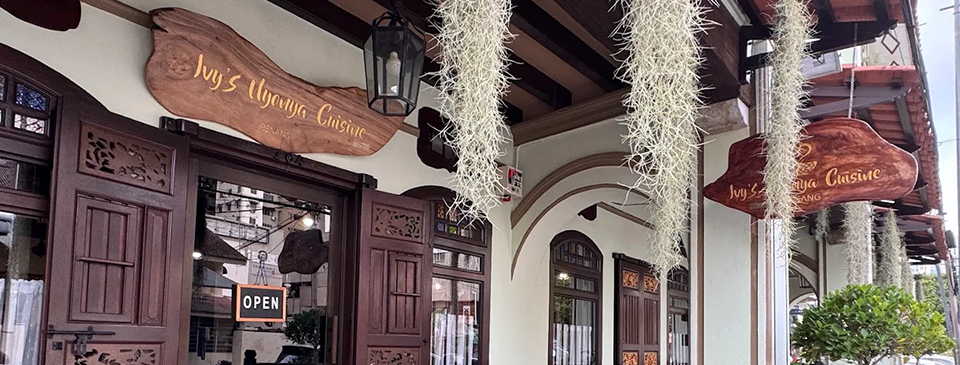
Ivy’s sits on Jalan Kedah, just outside the most heavily photographed stretch of George Town.
That is a good thing.
Penang has reached the stage where you can spend half a day photographing a blue door and then discover you have somehow forgotten to eat. Jalan Kedah is much more useful for that problem. It feels like a proper working part of George Town rather than a stage set constructed specifically for visitors.
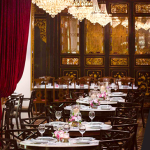
The restaurant itself is bigger than Ivy’s old premises, but the atmosphere remains more homely than glamorous. Think comfortable air-conditioning rather than colonial-palace theatrics. Think family meal rather than tasting menu.
And that suits the food.
Peranakan cooking has always been deeply connected to the household. These are dishes built around recipes, habits and techniques passed down through generations — sambals pounded, spices ground, sauces adjusted by instinct. It makes little sense to serve food like this in an environment that feels as cold and formal as a bank lobby.
The new space gives groups more breathing room, which is particularly useful because Ivy’s food is made for sharing.
There is also an amusing modern contradiction here: the restaurant retains that family-style feeling while incorporating a little technology into the service, including a robot that helps ferry dishes to tables.
A Nyonya restaurant with a robot.
Penang, I salute you.
What Should You Order?
If it is your first visit, I would resist the urge to attack the menu dish by dish.
This is one of those restaurants where the sharing sets make sense.
The reason is simple: Nyonya food is not really about one heroic plate. It is about the conversation between dishes. Something rich needs something sour. Something spicy needs something cooling. Something intensely savoury suddenly makes a plain spoonful of rice taste like a very good idea.
The sharing menus are designed to give you a tour through that landscape, with dishes such as Nyonya Assam Fish, Joo Hoo Char, Hoo Peow Thng, Kapitan Chicken and a Nyonya dessert depending on the set and current selections.
For two people, a set is particularly sensible.
For four people, even better.
For one person, well — you have my sympathy.
1. Kapitan Chicken: The One That Explains Why Nyonya Food Works
Let’s start with the Kapitan chicken.
This is one of the dishes most closely associated with Ivy’s, and for good reason.
Kapitan curry is not simply “chicken in curry sauce”. That description misses almost everything interesting about it.
The flavour is built from aromatics — shallot, lemongrass, galangal, ginger and chilli — rather than relying on a generic curry powder blast. The result should be thick, fragrant and layered, with the aromatics announcing themselves before the chilli has finished introducing itself.
At Ivy’s, the chicken is cooked until tender and the sauce is rich and creamy without losing its spice character.
This is the kind of curry that demands rice.
Not politely.
Demands.
The sauce clings to the chicken, and every spoonful of rice becomes an excuse to mop up another little patch of gravy. It is rich enough to feel indulgent but sufficiently aromatic that you don’t simply taste coconut milk.
And that distinction matters.
A bad curry tastes heavy.
A good Kapitan tastes alive.
2. Joo Hoo Char: The Dish That Looks Innocent Until the Sambal Arrives
Joo Hoo Char is one of those dishes that non-Peranakan diners can easily underestimate.
At first glance, it appears almost humble: finely shredded vegetables and ingredients stir-fried together, traditionally with dried cuttlefish, then eaten with lettuce leaves.
But Nyonya cuisine loves this sort of trick.
The texture is soft and savoury, while the lettuce brings a cool, fresh crunch. Then comes the sambal.
And suddenly your supposedly sensible vegetable dish has become a small act of self-destruction.
The chilli has bite.
This is also where I think Ivy’s shows the usefulness of traditional Nyonya cooking. There is no need for a slab of meat to make the table interesting. A vegetable-based dish can carry enormous flavour when the underlying spice paste is properly constructed.
Take a lettuce leaf.
Add Joo Hoo Char.
Add sambal.
Fold.
Eat.
Then wonder why you didn’t order more.
3. Nyonya Assam Fish: The Dish I Would Prioritise
If I had to pick one dish to put near the top of the table, it would be the Nyonya Assam Fish.
This is where Penang’s love of sour, spicy flavours makes perfect sense.
The tamarind-based gravy brings that unmistakable assam tang — sour enough to make your mouth wake up, but balanced by chilli, aromatics and savoury depth. Depending on the day’s selection, the fish can be seabass, cod or stingray, with the latter sometimes carrying an additional charge.
The ideal bite is all contrast.
Tender fish.
Sour gravy.
Chilli heat.
Fragrant herbs.
Rice underneath everything.
It is the sort of dish that cuts through a rich Kapitan curry beautifully.
After two bites of curry, you take a mouthful of Assam fish and suddenly your palate gets a reset.
That is the great thing about a properly planned Nyonya table. The dishes are not competing.
They are helping one another.
4. Assam Prawns: Sweet, Sour, Spicy and Very Dangerous With Rice
Then there are the Assam prawns.
Prawns are almost unfairly good at carrying a punchy sauce. Their natural sweetness works beautifully against sour tamarind and chilli.
The prawns here have long been among the dishes associated with Ivy’s, and recent diners continue to single them out.
I understand why.
A good Assam prawn should have enough sauce to coat the shell and enough acidity to stop the dish becoming cloying. You want the sweetness of the seafood first, followed by the sour-spicy hit.
And then, inevitably, another spoonful of rice.
This is how the meal quietly becomes larger than planned.
You order four dishes.
Then five.
Then someone says, “Maybe just one more.”
Classic Penang.
5. Beef Rendang: Deep, Dark and Built for Rice
Rendang is another dish where patience matters.
The point isn’t merely to make beef taste spicy. The beef should absorb the aromatics while the sauce reduces into something dense and intensely flavoured.
Think toasted spices, coconut, chilli and slow-cooked meat.
The best rendang has a sort of concentrated quality. You don’t need much of it.
A little beef.
A lot of rice.
And perhaps a vegetable dish on the side to keep you from forgetting that human beings technically require balance.
Recent diners have particularly praised the beef rendang, and it is an easy choice if you’re feeding a table with different preferences.
6. Otak-Otak: Soft, Fragrant and Properly Peranakan
Otak-otak can vary wildly.
At one extreme, you get something firm and aggressively fishy.
At the other, you get a soft, fragrant mixture where fish, egg, coconut milk, herbs and spice settle into a custard-like texture.
Ivy’s version is in the latter camp.
The appeal is not heat for the sake of heat. It is aroma.
Coconut milk gives it body. The spice mixture gives it perfume. Belacan adds that unmistakable fermented savouriness.
It is the sort of thing that makes sense as part of a larger spread rather than as a standalone main.
Take a little.
Eat it with rice.
Move on to something sour.
Come back.
That’s how Nyonya food works.
7. Hoo Peow Thng: Don’t Ignore the Soup
One of the easiest mistakes at a restaurant like this is assuming soup is filler.
It isn’t.
Hoo Peow Thng — fish maw soup — provides a quieter counterpoint to the stronger dishes.
After Kapitan curry, sambal, Assam gravy and rendang, a soup course gives the palate somewhere to breathe.
The texture is part of the attraction, particularly if you enjoy the gelatinous quality of fish maw.
It is not going to be the dish you shout about on Instagram.
It may, however, be the dish you appreciate halfway through the meal.
8. Perut Ikan: For the Nyonya Food Nerds
If you’re already comfortable with Nyonya flavours, look for Perut Ikan.
This is not the safe tourist order.
Perut ikan is made with preserved fish stomach and a sour, aromatic gravy, and it is one of those dishes that illustrates how much of traditional Peranakan cooking is built around preservation and making full use of ingredients.
The flavour profile is assertive.
Tangy.
Savoury.
Fermented.
A little funky.
Exactly the sort of dish that makes someone say, “What is that?”
And then take another bite.
Dessert: Pulut Hitam and a Little Coconut Milk Therapy
After all that chilli and tamarind, dessert arrives like a ceasefire.
Black glutinous rice with coconut milk is one of those desserts that doesn’t need to scream.
The rice is soft and chewy, the coconut milk rich and creamy, and the sweetness can be kept relatively restrained.
That last part is important.
After a meal this aromatic, you don’t necessarily want a dessert that tastes like condensed milk having an existential crisis.
Pulut hitam works because the coconut milk brings richness while the rice retains its earthy character.
Spoonful by spoonful, the chilli haze begins to lift.
You are full.
You are sweating slightly.
You are considering whether you could possibly eat again tomorrow.
Of course you could.
This is Penang.
The Standouts — Good and Bad
The biggest strength at Ivy’s is the coherence of the cooking.
The food doesn’t feel like a collection of generic Malaysian dishes wearing Peranakan costumes.
The menu has a distinct identity.
Chilli is important.
Tamarind is important.
Coconut is important.
Belacan is important.
And aromatic herbs and spices do the heavy lifting.
The Kapitan chicken remains the obvious gateway dish, while the Assam fish, Joo Hoo Char and Assam prawns give the meal its sharper edges.
The weakness is that Ivy’s is not the sort of place I would choose when I’m in a hurry.
This is not fast food.
The kitchen cooks to order, and busy periods can mean a longer wait. Recent accounts have included meals arriving quickly as well as occasions where a large booking significantly slowed service.
That’s something worth accepting before you sit down.
If you have a flight in two hours, don’t come here and blame the sambal.
Come when you have time.
Nyonya food deserves patience.
Who Is Ivy’s Good For?
Couples
Very good.
Order a set for two and add one extra dish if you’re particularly hungry.
Families
Probably the sweet spot.
The food is designed for sharing, and a family table gives you enough mouths to work through the variety.
First-Time Visitors to Penang
Absolutely.
This is one of the better ways to understand what Peranakan cooking actually tastes like rather than just ticking “Nyonya food” off a tourist checklist.
Serious Food Nerds
Yes — especially if you venture beyond Kapitan chicken into Perut Ikan, Joo Hoo Char and the more traditional dishes.
Solo Diners
Possible, but not ideal.
You will be looking longingly at everybody else’s table while eating one dish.
Bring a friend.
Preferably one who likes chilli.
Pro Tips Before You Go
1. Book ahead.
This is not a restaurant I would casually gamble on during a busy dinner service. Reservations are recommended, and the restaurant has a reputation for being popular despite sitting away from George Town’s busiest tourist streets.
2. Go with at least two people.
Nyonya food is a sharing cuisine. More people means more dishes.
3. Ask what is best that day.
If you’re unfamiliar with Peranakan cooking, don’t pretend you understand every item on the menu.
Ask.
That is how you discover things.
4. Keep rice on standby.
You will need it.
5. Don’t order everything at once.
The temptation is understandable. Resist it.
Start with a set, then add one or two dishes according to appetite.
6. Expect chilli.
Not every dish is fiery, but this isn’t the place to fear sambal.
7. Leave room for dessert.
Especially if pulut hitam is available.
Overview Cheat Sheet
| Detail | Ivy’s Nyonya Cuisine |
|---|---|
| Cuisine | Penang Peranakan / Nyonya |
| Style | Traditional, homestyle, sharing dishes |
| Signature | Kapitan Chicken |
| Also Order | Nyonya Assam Fish, Joo Hoo Char, Assam Prawns |
| For Adventurous Eaters | Perut Ikan |
| Dessert | Black Glutinous Rice with Coconut Milk |
| Price Level | $$ / moderate |
| Best For | Couples, families, food-focused travellers |
| Atmosphere | Comfortable, casual, family-style |
| Reservation | Recommended |
| Address | 100–104 Jalan Kedah, George Town, Penang |
| Phone | +60 13-433 7878 |
| Closed | Monday |
| Lunch | Around 11:30am–3:00pm |
| Dinner | Around 5:30pm–9:00pm |
Hours can change, particularly around public holidays, so a quick call before travelling is sensible.
How To Get There
Ivy’s is on Jalan Kedah, in the wider Pulau Tikus/George Town area.
By Grab, simply put Ivy’s Nyonya Cuisine into the destination. This is the option I’d recommend if you’re visiting Penang and don’t want to spend your precious holiday minutes participating in the island’s unofficial sport: circling the block looking for parking.
If you’re driving, parking is considerably easier than in the most congested heritage streets, but don’t assume that “there is parking” means “there is parking directly in front of your table”.
Penang has a special relationship with the automobile.
It tolerates cars.
It does not necessarily accommodate them.
If you are staying around central George Town, the journey is short enough that a Grab is usually the least stressful solution, particularly for dinner.
For walkers, Jalan Kedah is not in the postcard heart of the UNESCO core, so I’d treat it as a destination rather than something you stumble across while wandering.
Address & Contact
Ivy’s Nyonya Cuisine
100–104 Jalan Kedah
10050 George Town
Penang, Malaysia
Phone: +60 13-433 7878
Opening hours:
Tuesday–Sunday: approximately 11:30am–3:00pm and 5:30pm–9:00pm
Monday: Closed
Google Map
The Verdict
Ivy’s Nyonya Cuisine is not trying to reinvent Peranakan food.
Thank goodness.
Penang doesn’t need another restaurant turning traditional recipes into foam and putting them on enormous white plates.
What Ivy’s offers is more useful: a substantial introduction to the flavours that make Nyonya cooking so addictive.
The Kapitan chicken brings the creamy spice.
The Assam fish brings the sourness.
The Joo Hoo Char brings the vegetables and sambal.
The prawns bring sweetness against acidity.
The rendang brings depth.
The pulut hitam brings the coconut-milk landing strip at the end.
It is a meal constructed around contrasts.
And that is the secret.
The food isn’t shy. It doesn’t apologise for belacan. It doesn’t dilute the chilli until everyone can pretend they’re eating something else. It lets tamarind be sour and sambal be sambal.
There may be moments when service moves slower than you’d like. There may be dishes that land more strongly than others depending on your own tolerance for spice, richness and fermented flavours.
But that’s part of the bargain.
Give Ivy’s a little time.
Bring people you like.
Order for the table.
And, for heaven’s sake, don’t waste the sauce.
Would I make it a one-and-done tourist stop?
No.
The more interesting question is what happens when you return knowing what you like.
The first visit is about Kapitan chicken and Assam fish.
The second is when you start poking around the menu.
That’s when Nyonya food gets interesting.
That’s when you start ordering the dishes that sound slightly strange.
That’s when Perut Ikan becomes dinner.
And that’s when Ivy’s stops being “that Michelin Bib Gourmand place tourists recommend” and becomes what a good Penang restaurant should ultimately be:
a place you know how to eat.
Verdict: Worth the detour — and better with a hungry table.
#IvySNyonyaCuisine
#PenangFood
#PenangEats
#NyonyaFood
#PeranakanFood
#GeorgeTownPenang
#PenangFoodie
#MalaysianFood
#PenangTravel
#BibGourmand