Tek Sen Restaurant, George Town: The Penang Chu Char Institution That Earned Its Queue
Tek Sen does not announce itself with polished interiors or elaborate ceremony. It sits on Lebuh Carnarvon, in the middle of George Town’s heritage core, drawing diners with the more persuasive promise of sizzling woks, shared plates and recipes that have been refined across generations.
Tek Sen has been feeding people on Lebuh Carnarvon since 1965, long before George Town’s heritage shophouses became backdrops for boutique hotels, coffee bars and travellers hunting for the perfect Instagram frame. What began as Teik Seng Rice Stall, founded by Choo Teik Seng, eventually grew into the two-shophouse restaurant now known simply as Teksen. The family moved into the present premises in 2010, but the cooking remains rooted in the same Chinese-Malaysian food culture that made the original stall popular.
And yes, there is a queue.
Quite often, a serious one.
But here’s the thing: Tek Sen is not really about eating in a beautiful restaurant. It is about eating food that understands exactly what it is supposed to do.
This is chu char country — the Penang version of Chinese cooked-to-order food where the menu moves comfortably between Cantonese, Teochew, Hakka and Peranakan influences. The dishes are designed for sharing, for rice, for conversation and, ideally, for ordering one more plate than you originally planned.
That’s the dangerous part.
You arrive thinking you’ll have three dishes.
You leave wondering how you somehow ordered seven.
Overview Cheat Sheet
| Name | Tek Sen |
|---|---|
| Cuisine | Chinese / Penang chu char |
| Styles represented | Cantonese, Teochew, Hakka, Peranakan |
| Established | 1965 |
| Location | 18 & 20 Lebuh Carnarvon, George Town |
| Signature dish | Home Recipe Double Roasted Pork |
| Other must-orders | Sambal kangkung, homemade tofu, curry tumis fish |
| Michelin status | Bib Gourmand |
| Price level | Roughly RM20–RM60 per person depending on ordering |
| Best for | Groups, families, serious eaters, sharing |
| Atmosphere | Bustling, simple, old-school |
| Queue factor | High |
| Cash | Tek Sen’s own site states cash only |
| Closed | Tuesday |
Tek Sen is currently listed by the Michelin Guide as a Bib Gourmand restaurant, with the guide specifically highlighting its good-value cooking and recommending the deep-fried house-made tofu.
The Environment: Carnarvon Street, Plastic Chairs and the Smell of Lunch
Tek Sen doesn’t need to pretend to be somewhere else.
That is one of its greatest strengths.
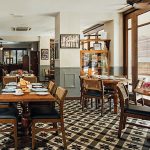
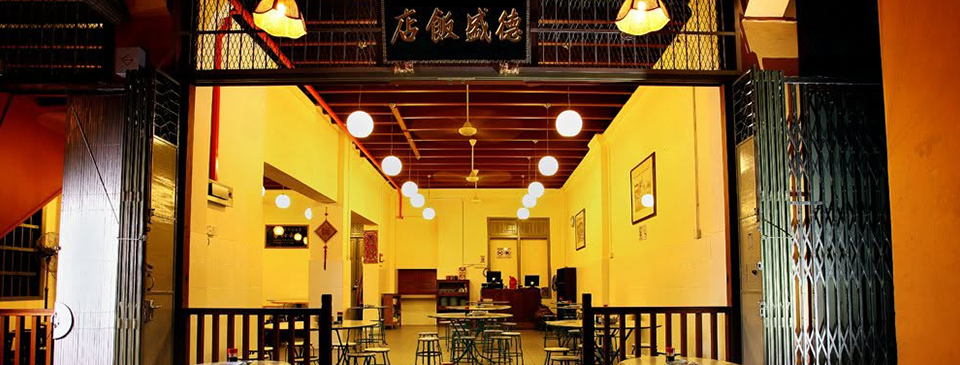
The restaurant occupies two heritage shophouses on Lebuh Carnarvon, right in the thick of George Town. Inside, the mood is straightforward: Chinese couplets, red tablecloths, simple furnishings and the sort of practical layout that tells you the restaurant is interested in turning tables over, not winning architecture awards.
And frankly, good.
Give me a restaurant that knows its kitchen better than its lighting department.
The street outside is part of the experience. George Town doesn’t do silent dining particularly well. There are pedestrians, motorcycles, cars inching through narrow streets, tourists looking slightly lost and locals moving around with the urgency of people who have somewhere considerably more important to be.
Then there is the heat.
Penang heat has a particular talent for making you hungry and impatient at exactly the same time.
This is especially relevant because Tek Sen is popular enough that waiting is not an unusual part of the meal. Recent customer reports describe queues forming before opening, with dinner particularly challenging at peak times. Some diners have reported waiting around an hour or more during busy periods.
So don’t arrive at Tek Sen expecting the serene, air-conditioned fine-dining experience where a waiter whispers the provenance of a carrot.
This is much more Penang than that.
You come hungry.
You queue.
You get seated.
Then somebody starts bringing food.
And suddenly the wait becomes easier to forgive.
A 60-Year Story Behind the Wok
Tek Sen’s history is worth knowing because it explains the restaurant’s character.
Choo Teik Seng came from Bukit Mertajam, an area historically shaped by Hakka and Teochew communities. After working as a cook’s assistant, he eventually took over a hawker spot on Carnarvon Street in 1965. His family helped him run what was then essentially a humble Teochew porridge and rice stall.
His son Choo Sam Ken grew up working there and eventually took over after his father’s death in 1984.
Three generations later, the business is still family-run.
That is the sort of history that matters in Penang because it isn’t a marketing story invented after the fact. The restaurant’s evolution is basically a condensed history of the city’s Chinese food culture: humble hawker food, family labour, changing neighbourhoods, increasingly adventurous cooking, and eventually recognition from Michelin.
The family says the restaurant’s current kitchen combines Cantonese, Teochew, Hakka and Peranakan influences. Its spices are freshly blended according to the family’s own recipes.
In other words, Tek Sen isn’t trying to be “traditional” in the museum-piece sense.
It is traditional in the way Penang food is actually traditional:
Keep the old recipes.
Change what needs changing.
Feed everybody.
What Should You Order?
This is where Tek Sen gets dangerous.
The menu is long enough to encourage poor decision-making.
And there are plenty of dishes worth ordering.
But if this is your first visit, I would build the table around four things:
Double roasted pork.
Sambal kangkung.
Homemade tofu.
Curry tumis fish.
Then add according to the size of your group.
1. Home Recipe Double Roasted Pork
If there is one dish that has become synonymous with Tek Sen, this is it.
The menu currently lists the Home Recipe Double Roasted Pork at RM16 for a medium portion and RM28 for a large, with a chilli padi version at the same prices.
The name sounds almost comically straightforward.
The eating isn’t.
The dish takes roast pork and gives it another turn in the wok, coating the meat in a sticky, savoury-sweet glaze. The result sits somewhere between roast pork, caramelised pork and an extremely dangerous rice companion.
There is fat, but the fat is doing useful work.
It softens the meat.
It carries the sauce.
It gives the caramelised exterior something to cling to.
And then there is chilli padi.
Tiny.
Aggressive.
Entirely unnecessary if you are trying to behave sensibly.
But this is not a dish designed for sensible behaviour.
The current menu also offers the double roast pork with chilli padi, and recent diners repeatedly single out the pork as one of the restaurant’s strongest dishes.
My advice?
Order it.
Don’t debate it.
This is one of those dishes where the table will go quiet for a moment because everyone is concentrating on getting the next piece.
2. Stir-Fried Kangkung with Sambal and Prawns
A good plate of kangkung should make you wonder why vegetables are sometimes treated as an obligation.
Tek Sen’s version comes with sambal sauce and prawns. The current menu lists it from RM10 for a small serving to RM15 for a large.
The appeal is contrast.
The vegetable brings freshness and crunch.
The sambal brings fermented, savoury heat.
The prawns add sweetness and seafood depth.
And suddenly you have the thing every rich pork dish needs: something green and sharp enough to reset the mouth.
Recent diners have specifically praised the fragrant sambal and balanced heat of this dish.
This is not decorative greenery.
This is a dish you should actively order.
3. Deep-Fried Homemade Tofu
Here’s where Tek Sen demonstrates that it doesn’t need pork belly to keep the table interested.
The homemade tofu is deep-fried and served with toppings that can include prawns, dried scallop and egg white, depending on the preparation.
The exterior gives you that gentle fried texture, while the tofu underneath remains soft and delicate.
Then comes the sauce.
Savoury.
Umami-heavy.
Designed to soak into rice.
The Michelin Guide specifically calls the deep-fried house-made tofu a must-order, noting its simple seasoning and intense savoury character.
This is probably the dish I would recommend to somebody who says they don’t eat much pork.
It is also one of those dishes that looks harmless when it lands.
Then you taste it.
Then somebody asks:
“Who ate the tofu?”
And suddenly there is an investigation.
4. Curry Tumis with Stingray
Now we move into Penang territory.
Tek Sen’s curry tumis is one of the dishes highlighted by the family themselves, available with stingray or black pomfret. The spice blends are freshly prepared according to the restaurant’s own recipe.
The stingray version is particularly interesting because the fish brings a dense, meaty texture that can stand up to the curry.
The gravy should be doing several things at once: spice, sourness, aromatic warmth and enough depth to make plain rice suddenly seem like an inadequate portion.
Recent diners have been especially enthusiastic about the stingray, describing it as meaty and satisfying.
There is an important caveat, though.
Not every diner loves the curry fish equally. Earlier reviews have found the Assam curry less pronounced than expected, particularly with black pomfret.
That doesn’t make it a bad dish.
It means you should understand what Tek Sen does best.
If you want maximum instant gratification, order the pork.
If you want something more distinctly Penang, the curry tumis deserves consideration.
The Other Orders Worth Knowing
The menu is broad enough that a group should explore.
The deep-fried chicken with umeboshi, or sour-plum sauce, has been a long-running favourite, combining crisp fried chicken with a sweet-tart sauce. Other choices include sweet and sour pork, pork ribs, Mapo tofu, seasonal vegetables, seafood dishes and various preparations of fish.
The trick is not ordering seven meat dishes.
Tek Sen is built around sharing, so balance the table.
One rich pork dish.
One vegetable.
One tofu.
One seafood or fish.
Rice.
Then see whether you have room for another.
You probably don’t.
You will order another anyway.
The Taste Test: Why the Food Works
The cleverness of Tek Sen isn’t that every dish is revolutionary.
It isn’t.
And that is perfectly fine.
The strength is in the balance.
There is sweetness, but usually something sharp or salty to pull it back.
There is chilli, but it isn’t simply chilli for the sake of making you sweat.
There are fermented ingredients, but they are used as flavour rather than gimmick.
And the cooking is built for rice.
This last point is important.
Some restaurants serve food that tastes impressive by itself but becomes exhausting halfway through a meal.
Tek Sen’s food is different.
You take pork.
Rice.
Sauce.
Vegetable.
Rice again.
Maybe tofu.
Another mouthful.
That’s the rhythm.
It is deeply Southeast Asian in its logic.
The dishes aren’t isolated performances.
They are designed to work together.
That is why a Tek Sen meal can feel more satisfying than a technically more sophisticated dinner.
The food has somewhere to go.
Straight into the rice.
The Good and the Bad
Let’s be brutally honest.
The biggest problem with Tek Sen isn’t the food.
It’s getting the food.
The restaurant’s popularity means queues can be significant. The queue was crazy long when I was there. And recent Google reviews mention people arriving before opening and still finding the restaurant full, while others describe very long waits during dinner.
If you’re travelling with impatient children, somebody who hates standing around, or a friend who thinks waiting twenty minutes for lunch constitutes a human-rights violation, plan carefully.
The other limitation is atmosphere.
This is not where you come for privacy.
It’s not where you come for hushed conversation.
And if your idea of a romantic dinner requires nobody at the next table knowing exactly what you ordered, perhaps choose somewhere else.
But the flip side is that the restaurant has a wonderfully democratic energy.
Families.
Tourists.
Locals.
Food obsessives.
People who have been coming for years.
People who have read about it five minutes ago.
Everybody is ultimately here for the same thing.
Food.
Who Is Tek Sen Good For?
Food-first travellers
Absolutely.
If your Penang itinerary revolves around eating rather than sightseeing, put Tek Sen high on the list.
Groups
Ideal. As well as not so ideal.
The menu makes much more sense when you have four or six hungry people sharing dishes. Not so ideal because securing a table large enough for that many people requires quite a bit of patience.
Couples
Yes, but order intelligently.
Two people can enjoy Tek Sen, although you won’t be able to sample as much of the menu.
Solo diners
Possible, but frustrating.
It is easier to find a shared table, and while you can just order a single signature dish with rice, you will miss the entire point of a chu char meal, which is sampling a little bit of everything.
Families
Very suitable, provided everybody is prepared for the possibility of waiting, and sitting separately.
Instagram hunters
Take your photo, then put the phone down.
You’re here to eat.
Pro Tips Before You Go
1. Don’t treat opening time casually.
Current listings show lunch around 11:30am–2pm and dinner around 5:30pm–8pm, with Tuesday closed.
2. Expect queues.
MY suggestion is to arrive early, this is the safest strategy, particularly at dinner time.
3. Call if you’re a larger group.
Call them at +60 12-981 5117 for reservations.
4. Don’t order too much immediately.
The portions are meant for sharing, and it is easy to get carried away. But keep in mind that ordering a second round can result in a significantly long wait.
5. Start with the pork.
If you’re only going once, don’t overthink this.
6. Add something green.
The sambal kangkung gives the meal balance.
7. Share the tofu.
It is too good to leave to one person.
8. Bring cash, just in case.
Card and cash are both accepted, though I did read that there are a few Google reviews claiming the restaurant is cash-only.
How to Get There
Tek Sen is at 18 & 20 Lebuh Carnarvon, George Town, Penang 10100, in the heart of the UNESCO heritage core.
The easiest option for visitors is generally Grab.
Driving is another matter.
This is George Town.
Parking can become its own side quest.
If you’re already exploring the heritage area, walking is arguably the nicest way to arrive. Come through the surrounding streets, wander past the old shophouses, let yourself get slightly lost, and eventually follow your nose toward Carnarvon Street.
The beauty of eating in George Town is that the journey to lunch can be half the meal.
For navigation:
Address & Contact
Tek Sen Restaurant
18 & 20 Lebuh Carnarvon
George Town, 10100 Penang, Malaysia
Phone: +60 12-981 5117
Current listed hours:
Monday: 11:30am–2:00pm, 5:30pm–8:00pm
Tuesday: Closed
Wednesday: 11:30am–2:00pm, 5:30pm–8:00pm
Thursday: 11:30am–2:00pm, 5:30pm–8:00pm
Friday: 11:30am–2:00pm, 5:30pm–8:00pm
Saturday: 11:30am–2:00pm, 5:30pm–8:00pm
Sunday: 11:30am–2:00pm, 5:30pm–8:00pm
Hours can change, so calling ahead is sensible.
The Verdict
Tek Sen is not the restaurant I would recommend because it is fashionable.
It is fashionable because it has spent six decades being good at feeding people.
That’s an important distinction.
There are plenty of restaurants in George Town where the story is more interesting than the food.
At Tek Sen, the story and the food reinforce each other.
A Hakka immigrant comes to Penang looking for opportunity.
A humble rice stall appears on Carnarvon Street.
Children grow up around the kitchen.
One generation hands the business to the next.
The stall becomes a restaurant.
The restaurant moves into two heritage shophouses.
The menu expands.
The family keeps cooking.
And eventually Michelin comes knocking.
The Michelin Guide now lists Teksen as a Bib Gourmand restaurant and describes it as a no-frills establishment serving traditional cooking with local twists.
But honestly?
Forget Michelin for a second.
The real test is whether you can imagine coming back.
And I can.
Not because every dish is flawless. It isn’t.
Not because the queue is fun. It definitely isn’t.
And not because the restaurant is particularly glamorous.
It isn’t trying to be.
You come back because the food makes sense.
Sweet pork against steamed rice.
Sambal against fresh vegetables.
Soft tofu against savoury gravy.
Tangy curry against firm fish.
Cold drink against Penang heat.
That is the rhythm.
That is the reason.
Tek Sen is not a one-and-done restaurant.
It is the sort of place where, after your first visit, you start thinking about what you didn’t order.
Then you come back.
You tell yourself you’ll try something different.
The waiter asks whether you want the double roasted pork.
You say yes.
Obviously.
And that, more than any Michelin sticker or online ranking, is probably the strongest review you can give a Penang restaurant.
Verdict: Worth the queue — especially if you come hungry and order for the table.
My ideal first-timer spread:
Double Roasted Pork with Chilli Padi + Sambal Kangkung + Deep-Fried Homemade Tofu + Assam/Curry Tumis Stingray + Steamed Rice.
Come early.
Bring cash.
Wear something that can survive Penang heat.
And don’t make the mistake of thinking you’re just going for lunch.
At Tek Sen, lunch has a habit of turning into a small family banquet.
#TekSenRestaurant
#TekSenPenang
#PenangFood
#PenangFoodie
#GeorgeTownPenang
#PenangEats
#ChuChar
#MalaysianFood
#PenangHeritage
#MichelinBibGourmand