Pinxin Vegan Cuisine: Where Penang’s Comfort Food Goes Plant-Based Without Losing Its Soul
There are two kinds of vegan restaurants in Penang.
The first kind seems to have been designed by someone who has never met a Malaysian uncle with a wok, a bottle of soy sauce and absolutely no interest in counting calories. You get quinoa, avocado toast, imported nut cheese and a smoothie bowl photographed from six different angles.
Then there is Pinxin Vegan Cuisine.
This is the more interesting kind.
At Pinxin, the point isn’t to convince you that Malaysian food can be made vegan. The point is to remind you that Malaysian food has always been about layers of flavour, clever substitutions, fermented things, spice pastes, noodles, sambal, coconut, herbs and the occasional ingredient that looks suspiciously like it came from another planet.
Located at 38 Lebuh Tye Sin in George Town, Pinxin has built its reputation around plant-based versions of familiar local favourites: Hokkien noodles, nasi lemak, asam laksa, Jawa mee, curry noodles, satay and an assortment of mushroom- and tofu-based dishes. The restaurant is entirely vegan, with the kitchen’s approach extending beyond simply removing meat from a dish.
And that distinction matters.
Because if you’re travelling around Penang eating your way through hawker centres, being vegan can sometimes feel like watching the party through a window. Everyone else gets the smoky char, the curry, the laksa, the noodles swimming in broth.
Pinxin is essentially saying: sit down, lah. You’re eating too.
The Environment: George Town Without the Instagram Filter
Lebuh Tye Sin sits just outside the postcard version of George Town.
You don’t come here expecting some polished tropical resort restaurant with rattan furniture arranged precisely beneath a hanging monstera. This is George Town: old buildings, traffic, heat radiating from the pavement, scooters threading their way through gaps that don’t appear large enough for scooters, and that familiar background soundtrack of engines, conversations and kitchen activity.
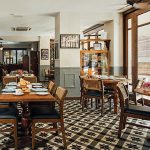
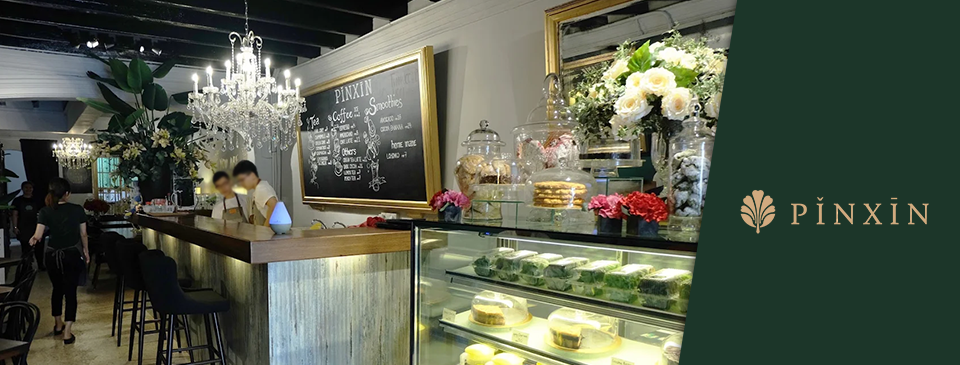
Pinxin itself has a more comfortable, deliberately decorated interior than the bare-bones kopitiam experience you might associate with Penang food.
There’s an antique-influenced character to the restaurant, giving the space a little personality rather than leaving it as another anonymous vegetarian café. The overall atmosphere is relaxed and comfortable rather than aggressively fashionable.
And frankly, that’s the right choice.
Penang food doesn’t need another restaurant trying to look like Bali.
What works here is that the setting gives you somewhere to sit down properly and explore the menu. You can come alone, order noodles and quietly disappear into your lunch, or bring a couple of friends and turn the meal into a proper grazing session.
One practical warning: Penang’s humidity doesn’t negotiate.
Even when you’re sitting indoors, a busy lunch service can feel warm. That’s part of the local rhythm, although the restaurant has been noted for adjusting the indoor temperature when requested.
In other words, don’t arrive dressed like you’re going to a rooftop bar in Singapore.
You’re here to eat.
What Should You Order?
This is where Pinxin gets interesting.
The menu isn’t simply a parade of vegan versions of Western food. Its strength is distinctly Penang and Malaysian.
1. Prosperous Hokkien Noodle
If I had to choose one dish to introduce someone to Pinxin, this would be high on the list.
Hokkien mee is one of those dishes that doesn’t need explaining to Penangites. The appeal lies in the broth: rich, savoury and deeply aromatic, with noodles providing the bulk and texture while toppings add contrast.
Pinxin’s Prosperous Hokkien Noodle has become one of its signature orders, and the appeal is obvious even before you start debating whether you can finish the bowl.
The plant-based approach doesn’t mean the dish has to be thin or apologetic.
This is comfort food.
Recent diners have particularly singled out the noodles and broth, with descriptions ranging from deeply flavourful to lighter and clean-tasting rather than aggressively salty.
That distinction is worth making.
Penang food can be wonderfully intense, but intensity isn’t the same thing as salt.
A good bowl should have depth.
You want savouriness first, aromatics underneath, noodles carrying the broth, and toppings giving you something to chew.
Pinxin seems to understand that balance.
2. Fiery Curry Noodle
Now we get to the dish for people who look at a chilli warning and think, challenge accepted.
The Fiery Curry Noodle is one of the more frequently recommended choices for anyone who enjoys spice.
The curry is described as thick and flavour-packed rather than simply hot for the sake of being hot.
That’s important.
Anyone can make something painful.
The trick is making something spicy that you actually want another mouthful of.
With a curry noodle dish, I’m looking for the usual suspects: toasted spice, coconut richness where appropriate, chilli heat, aromatics and enough savouriness to keep the whole thing anchored.
If the curry simply burns the tongue and leaves nothing behind, it’s a gimmick.
If the heat arrives in waves and keeps revealing new flavours underneath, you’ve got something.
This is the Pinxin dish I’d recommend to adventurous eaters.
Just don’t order it while announcing loudly that you’re “very good with spicy food.”
Penang has a way of humbling people.
3. Nasi Lemak
Nasi lemak is where a vegan kitchen really has to prove itself.
The rice needs to be fragrant.
The sambal needs character.
The accompaniments need contrast.
And the whole plate needs to feel like nasi lemak rather than “rice with some vegan things next to it.”
Pinxin offers variations including its classic nasi lemak and a vegetable curry version.
The vegetable curry version is particularly interesting because it pushes the dish away from the standard protein-heavy interpretation and lets the vegetables carry more of the plate.
Tempeh provides crunch and nuttiness, pickled vegetables bring acidity, while the curry gives the plate warmth and body.
That’s exactly the sort of composition a good nasi lemak needs.
Fat.
Heat.
Acidity.
Crunch.
Soft rice.
A little sweetness.
Something salty.
You want every bite to feel slightly different.
4. Nyonya Lemak Laksa
If you’re coming to Penang, laksa is not optional.
Well, technically it is.
But why would you?
Pinxin offers a Nyonya-style lemak laksa alongside its other noodle dishes, giving diners another route into Penang’s famously complicated relationship with coconut milk, spice and noodles.
The key word here is lemak.
Compared with the sour, tamarind-driven character of assam laksa, a lemak laksa takes you into a richer, creamier flavour territory.
This is the sort of bowl where you want to pause between mouthfuls.
Not because you’re trying to analyse it like a wine critic, but because Malaysian food rewards attention.
There’s always another layer.
One bite gives you coconut.
The next gives you chilli.
Then herbs.
Then the noodles.
Then something savoury lurking underneath.
It’s also worth remembering that laksa is intensely regional. Penangites can debate the details of laksa with the seriousness normally reserved for constitutional law.
So don’t walk into Pinxin expecting an exact carbon copy of every bowl you’ve eaten elsewhere.
That would rather defeat the point.
5. Jawa Mee
Jawa mee is an underrated Penang comfort food.
It has that slightly messy, saucy character that makes it perfect for a humid afternoon when you want something substantial but don’t necessarily want a bowl of soup.
Pinxin’s version has been described as relatively light in gravy while still carrying flavour, with chewy, crunchy mushroom toppings providing textural contrast.
And that’s a good lesson in vegan cooking.
You don’t need to replicate meat fibre perfectly if you give the dish enough contrast elsewhere.
Soft noodles.
Saucy gravy.
Crunchy toppings.
Aromatic garnish.
Something acidic.
Something spicy.
The mouth doesn’t care whether every component is pretending to be pork.
It cares whether the bite is satisfying.
The Side Dish You Shouldn’t Ignore: Kuang Chiang
If there’s one smaller dish that deserves more attention, it’s kuang chiang.
Think taro and peanuts wrapped in tofu skin and fried.
That combination is practically engineered to be addictive.
Crisp exterior.
Soft, starchy interior.
Nutty richness.
A little savouriness.
It is exactly the sort of thing that makes you say, “Let’s just order one,” and then realise the plate has mysteriously disappeared.
The dish has been particularly praised by diners who enjoy traditional-style Malaysian flavours, and it fits neatly into Pinxin’s broader philosophy: plant-based doesn’t have to mean modern or Western.
And Then There Is the Mushroom Game
One of Pinxin’s most interesting ingredients is hericium mushroom, which appears in various dishes and is used to provide a substantial, meaty texture without using meat.
It’s an ingredient worth trying even if you’re not vegan.
That is probably the strongest test for any plant-based restaurant.
If the only people enjoying the food are committed vegans, the restaurant is serving a niche.
If omnivores start fighting over the last mushroom, you’re onto something.
Pinxin also uses mushroom-based preparations in dishes such as its satay and other savoury mains.
The satay is particularly useful as a test dish because satay is all about texture and sauce.
The skewer needs enough chew.
The exterior needs some charred character.
And the peanut sauce needs to be rich enough to cling without turning into a sweet paste.
One recent diner found the satay itself decent but thought the accompanying sauce lacked excitement, which is a useful reminder that not every plate here is going to land perfectly for every palate.
That’s fair.
No restaurant gets a free pass simply because it is vegan.
The Honest Bit: Where Pinxin Doesn’t Quite Nail It
Here’s where I’ll resist the temptation to give you the usual food-blogger “everything was incredible!” treatment.
Some dishes appear to be more successful than others.
The strongest argument for Pinxin is clearly its Malaysian noodle and rice dishes. That’s where the restaurant’s identity feels most convincing.
The weaker experiences tend to come when flavours don’t quite balance.
One recent diner found certain tofu, mushroom and vegetable dishes too sour or spicy and felt the flavours lacked balance. Another felt some dishes were below expectations while praising the satay and drink.
And that’s useful information.
Because plant-based food can sometimes fall into a trap: chefs become so determined to create “interesting” flavour combinations that they forget food should still be pleasurable.
Sourness needs richness to push against it.
Heat needs sweetness, salt or fat to give it shape.
Mushrooms need seasoning.
Tofu needs something.
Otherwise you end up with a plate that is technically clever but emotionally boring.
Pinxin is at its best when it sticks close to the flavours Penang already understands.
The Service
The general service impression is friendly and relaxed, although this is not necessarily a place to visit when you have somewhere to be in twenty minutes.
A busy Saturday can slow things down, particularly when the restaurant is full.
Orders can be made through a QR-code menu, although staff are also available to help.
That’s convenient, especially if you’re unfamiliar with vegan Malaysian food and don’t know your hericium from your tempeh.
I’d actually encourage first-time visitors to ask questions.
Don’t simply point at the prettiest photograph.
Tell them what you like.
Spicy?
Soupy?
Coconut-heavy?
Noodle lover?
Want something lighter?
The menu is broad enough that a little guidance can save you from ordering three dishes with similar textures.
Who Is Pinxin Good For?
Vegans
Obviously.
But more importantly, vegans who are tired of eating Western food while travelling in Asia.
This is one of Pinxin’s biggest strengths.
You don’t have to settle for a veggie burger while everyone else is eating laksa.
Vegetarians
Also an easy yes.
Omnivores
Absolutely.
If you’re the friend who says, “I’m not vegan but I’ll try it,” this is exactly the kind of restaurant that might change your mind about what vegan food can be.
Families
The broad menu makes sharing relatively easy.
Noodles, rice dishes, tofu, mushrooms, satay and sides mean different people can order different things without forcing everyone into the same flavour profile.
Solo diners
Very good.
A bowl of Hokkien noodles or curry noodles is an easy solo meal.
No elaborate ceremony required.
Overview Cheat Sheet
| Category | Details |
|---|---|
| Restaurant | Pinxin Vegan Cuisine |
| Style | Malaysian / Penang / Chinese / Vegan |
| Best for | Local-style vegan comfort food |
| Must-order | Prosperous Hokkien Noodle |
| Also try | Fiery Curry Noodle, Nasi Lemak, Nyonya Lemak Laksa |
| Snack / side | Kuang Chiang, vegan satay |
| Price guide | Roughly RM20–40 per person |
| Atmosphere | Relaxed, comfortable, heritage-influenced |
| Dietary | 100% plant-based |
| Opening hours | 11:00am–8:30pm |
| Closed | Tuesday |
| Address | 38 Lebuh Tye Sin, 10300 George Town, Penang |
| Phone | +60 19-481 7832 |
Current directory information lists the restaurant as closed on Tuesdays and open from 11am to 8:30pm on the other days.
How To Get There
Pinxin is at 38 Lebuh Tye Sin, George Town, within the wider George Town heritage-city area.
If you’re driving, prepare yourself mentally for the usual Penang parking lottery.
This is George Town.
You don’t simply “park.”
You circle.
You negotiate.
You spot a space approximately the width of a paperback novel.
You consider it.
A motorbike appears.
You continue circling.
For that reason, Grab can be considerably less stressful, particularly around lunch and dinner.
If you’re already exploring George Town on foot, the restaurant is also well suited to being incorporated into a wider food-and-heritage wandering route.
And that’s how I would approach it.
Don’t make Pinxin the only reason you came to this part of town.
Make it one stop in a day of eating.
That’s more Penang.
Insider Tips
Go outside the busiest meal period if you dislike waiting.
The restaurant can get busy, and peak periods naturally mean slower service.
Don’t order only one dish if you’re travelling with friends.
The menu is much more interesting when shared.
Get a noodle dish.
Get a rice dish.
Get something fried.
Get something mushroom-based.
Then argue over which one was best.
Ask for help if you’re unsure.
The menu is extensive enough that a recommendation can be useful, particularly if you’re unfamiliar with Malaysian vegan cooking.
Bring an open mind.
Don’t judge every dish by how closely it imitates meat.
Some of the best things here aren’t trying to fool you.
They’re simply trying to be delicious.
Address & Contact
Pinxin Vegan Cuisine
38, Lebuh Tye Sin
10300 George Town
Penang, Malaysia
Phone: +60 19-481 7832
Opening hours:
Monday: 11:00am–8:30pm
Tuesday: Closed
Wednesday–Sunday: 11:00am–8:30pm
The Verdict: One-and-Done or Weekly Staple?
Pinxin Vegan Cuisine isn’t interesting simply because it is vegan.
That’s the easy headline.
The more important story is that it treats Malaysian food as something worth preserving rather than something that needs to be sanitised for a modern vegan audience.
The Hokkien noodles are the kind of dish I’d point a first-time visitor toward.
The fiery curry noodles are for people who want the chilli to have an opinion.
The nasi lemak gives you the familiar comfort of coconut rice, curry, tempeh and pickles.
The laksa provides another route into Penang’s endlessly debatable noodle universe.
And the mushroom and tofu dishes show what a plant-based kitchen can do when it stops trying to make everything resemble a slab of meat.
There will be dishes that land harder than others.
Some combinations may be too sour, too spicy or simply not balanced enough for your palate. Recent experiences are mixed enough to make that clear.
But that’s not a reason to dismiss the place.
It is a reason to order intelligently.
And that, more than anything, is how I’d approach Pinxin.
Come hungry.
Order local.
Share widely.
Don’t be afraid of the chilli.
And if someone at the table says, “But it’s vegan, right?”, just smile.
Because halfway through a bowl of Hokkien noodles, that question becomes rather irrelevant.
You’re not eating vegan food anymore.
You’re eating Penang food.
And that’s the real trick Pinxin has pulled off.
Verdict: Worth returning to — especially for the Malaysian noodle dishes.
Not every plate will be a five-star revelation, but when Pinxin gets the balance right, it delivers something genuinely useful for George Town’s food scene: a place where plant-based diners can eat local food without feeling like they’ve been given the consolation prize.
And in Penang, that is no small achievement.
#PinxinVeganCuisine
#PenangVegan
#VeganPenang
#GeorgeTownFood
#PenangFood
#VeganMalaysia
#MalaysianFood
#VeganNasiLemak
#VeganLaksa
#PenangFoodie