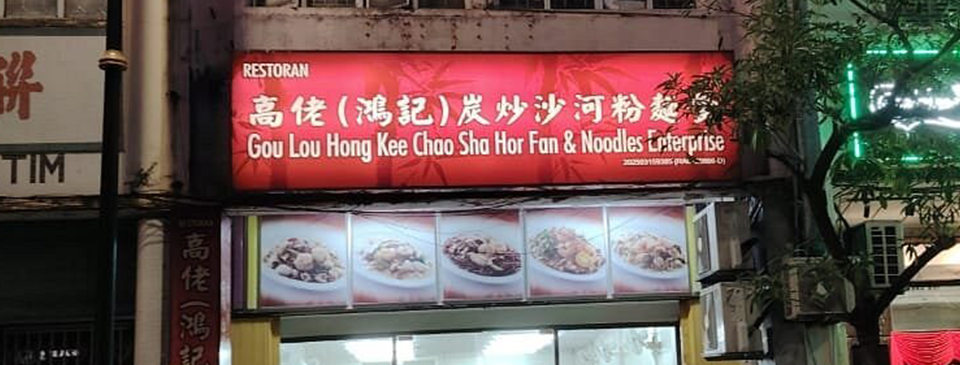
Gou Lou Hong Kee Chao Sar Hor Fun & Noodles: The Charcoal-Fired Noodle Shop That Still Knows What Wok Hei Means
There are places in George Town where the food is almost beside the point.
You go for the shophouse. The tiles. The old signboard. The carefully distressed walls that look like somebody spent RM80,000 trying to make them look like they cost nothing.
And then there are places like Gou Lou Hong Kee Chao Sar Hor Fun & Noodles, where the room isn’t trying to impress you at all.
It is here for one reason: noodles.
At 89 Lebuh Campbell, right in the middle of old George Town, Gou Lou Hong Kee is the sort of Cantonese noodle shop that makes you wonder why anyone ever needed a complicated menu. The emphasis is on charcoal-fried noodles, especially sar hor fun, alongside old-school favourites such as Hokkien char, oyster noodles, yee fu mee, mee sua koh and fried bee hoon. The restaurant is air-conditioned, comfortably no-frills and decidedly more interested in what comes out of the wok than what appears in your Instagram feed.
And that is precisely its charm.
There is history here too. The Gou Lou name traces back to a noodle business associated with the Thum family and a tradition dating to the 1930s. The current Campbell Street incarnation carries that lineage forward, with the cooking centred around the same old-fashioned Cantonese noodle repertoire.
In Penang food terms, that’s not a small thing.
Recipes come and go. Stalls move. Coffee shops disappear. The names survive, sometimes attached to dishes that have been softened, sweetened and modernised beyond recognition.
Gou Lou Hong Kee has resisted that temptation.
And thank goodness for that.
The Setting: Campbell Street Without the Costume Drama
Lebuh Campbell is one of those George Town streets where you can walk ten metres and cross several decades.
Traditional Chinese businesses sit beside newer cafés. Five-foot ways provide shade from the Penang sun. Motorbikes squeeze through gaps that seem to exist solely because Penang traffic has collectively agreed that physics is negotiable.
Gou Lou Hong Kee sits at No. 89.
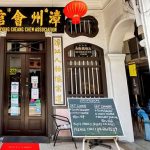
There is nothing particularly grand about the frontage. This isn’t a restaurant designed to stop pedestrians in their tracks. It belongs to that older category of Penang eating places where the sign tells you what the kitchen does and then politely gets out of the way.
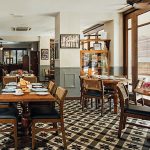
Inside, the atmosphere is functional rather than theatrical. Air-conditioning gives you a welcome break from Campbell Street’s humidity, and the dining room is comfortable enough for a proper noodle session rather than a hurried roadside slurp.
That contrast works.
Outside: George Town heat.
Inside: noodles.
Honestly, what more do you need?
The location also makes this a useful stop during a food crawl around central George Town. The shop sits close to other long-established Chinese eating places, including Tho Yuen and the Hong Kee wantan mee operation associated with the same wider family story.
It feels like the kind of neighbourhood where lunch has been happening long before anybody started calling it a “food trail.”
What Is Gou Lou Hong Kee Famous For?
The obvious answer is sar hor fun.
But let’s clear up one little Penang linguistic mess first.
What many Penangites call char hor fun combines the Hokkien word “char”, meaning fried, with the Cantonese “hor fun”, referring to the broad, flat rice noodles. Traditionally, the dish is associated with Cantonese cooking and the broad rice noodles of Guangdong. In Penang, the name has become part of the local food vocabulary.
At Gou Lou Hong Kee, you can have it in both wet and dry styles.
And the dry version is the one I would put at the top of the order.
Why?
Because this is where the charcoal cooking becomes the star.
The Must-Order: Dry Sar Hor Fun
The first thing that makes a properly fried sar hor fun exciting is texture.
Those broad rice noodles need to remain tender without becoming mushy. They should carry enough frying to develop smoky edges while retaining that slippery, almost delicate chew that makes hor fun so satisfying.
At Gou Lou Hong Kee, the noodles are cooked with charcoal, giving the dish its distinctive wok hei. Earlier descriptions of the shop specifically note the subtle charcoal aroma and controlled oiliness, while more recent diner feedback continues to single out the char hor fun for its fragrance and smoky character.
This is the important bit about wok hei.
It isn’t simply “smoky.”
Good wok hei is a combination of heat, timing, oil, seasoning and contact with the cooking surface. The noodles need to move quickly enough that they fry rather than stew. The aromatics become toasted. The sauces cling rather than drown everything.
You get that characteristic aroma before the first bite.
Then comes the texture.
Soft hor fun.
Slightly charred edges.
A savoury seasoning that stays on the noodle rather than turning the whole plate into brown sauce.
And underneath it all, that faint charcoal perfume.
Wet Sar Hor Fun: The Comfort-Food Version
If dry sar hor fun is about the wok, wet sar hor fun is about the gravy.
Here the broad rice noodles meet a glossy Cantonese-style sauce, with seafood, meat and greens bringing different layers of savouriness to the plate.
The traditional preparation described for Gou Lou’s version includes pork, pig’s liver, prawns, fish meat and choy sum, with the noodles first receiving a frying treatment before the braising sauce is added.
That combination is what makes a good wet hor fun so addictive.
The sauce shouldn’t merely be salty.
It needs depth.
A little sweetness.
Seafood umami.
The richness of pork.
The freshness of greens.
And just enough egginess and starchiness in the gravy to coat those slippery noodles.
If dry hor fun is the choice for people who want to taste the wok, wet hor fun is for people who want to be hugged by it.
Tai Lok Mee: Dark, Glossy and Properly Sinful
Then there is Tai Lok Mee, Gou Lou Hong Kee’s nod toward Kuala Lumpur-style Hokkien char.
This is the darker, more assertive member of the family.
Thick yellow noodles are fried with dark soy, pork lard, prawns, liver and other savoury ingredients. The noodles take on that deep brown colour that immediately tells you this isn’t going to be a delicate meal.
The best Hokkien char has a particular personality.
It is salty.
Sweet.
Oily.
Smoky.
A little bit naughty.
And absolutely unapologetic.
The pork lard matters here. Without enough fat, the noodles can taste flat and dry. Too much, and the whole plate becomes an afternoon nap waiting to happen.
Gou Lou’s version has long been praised for keeping the oil under control while still allowing the charcoal-fried character to come through.
This is the dish I would order when arriving hungry enough to make sensible decisions unnecessary.
Oyster Noodles: The Old-School Wild Card
Oyster noodles are increasingly difficult to find in Penang, which makes this one worth considering if you’re travelling with someone who loves seafood.
The dish is wonderfully old-fashioned.
Plump oysters.
Noodles.
Seafood sweetness.
A savoury sauce tying everything together.
It doesn’t have the immediate visual drama of a plate of char kway teow, but that is rather the point. Oyster noodles belong to an older style of Chinese cooking where the attraction was the ingredient itself rather than elaborate presentation.
Gou Lou’s menu preserves this style alongside its other traditional noodles.
If you’re eating with two or three people, this is exactly the sort of dish I’d add to the table for sharing.
Mee Sua Koh: Soft, Silky Comfort
Mee sua koh occupies a completely different corner of the menu.
Where the fried noodles are about heat, char and caramelisation, mee sua koh is about softness.
The wheat noodles are silky and tender, sitting in a comforting broth that feels almost deliberately old-fashioned.
This is the dish for the rainy Penang afternoon.
Or the morning after a night that involved one too many plates of charred noodles.
Or simply when you want something less aggressive.
One particularly useful local trick is a little black vinegar, which gives the dish a sharpness that cuts through the richness and wakes up the broth.
That tiny splash is the kind of finishing touch that separates eating from merely filling your stomach.
Belacan Fried Chicken: Don’t Ignore the Side Dish
And now we get to the slightly dangerous part.
The noodles are the reason you came.
The belacan fried chicken is how you accidentally eat more than you planned.
The chicken is marinated with fermented shrimp paste before frying, creating that unmistakable belacan aroma and a deep savoury character. The exterior should bring the expected crunch, while the meat provides enough juicy contrast to keep the fermented shrimp flavour from becoming overwhelming.
This is not shy food.
Belacan never enters a room quietly.
It announces itself.
For some diners, that’s heaven.
For others, it is the culinary equivalent of your auntie opening every cupboard while you’re trying to sleep.
If you enjoy fermented shrimp paste, order it.
If you don’t, perhaps don’t start your Gou Lou relationship with this particular plate.
What I Like About Gou Lou Hong Kee
1. The charcoal cooking
This is the big one.
There are plenty of places capable of frying noodles.
There are fewer places where the cooking process itself gives the noodles that particular charcoal character.
The wok hei is not a marketing slogan here; it is central to the food’s identity.
2. The old-school menu
Sar hor fun.
Yee fu mee.
Oyster noodles.
Hokkien char.
Mee sua koh.
These aren’t dishes designed by a branding consultant.
They belong to an older Penang-Chinese food tradition.
3. Air-conditioning
Never underestimate this.
Penang is hot.
Penang is humid.
Penang is why is my shirt wet and I’ve only walked 400 metres? hot.
Being able to eat a hot plate of charcoal-fried noodles in an air-conditioned room is a small but meaningful luxury.
4. Reasonable pricing
Generally in the affordable range.
This is exactly where traditional Penang food should be: accessible enough to become a habit.
Where It Isn’t Perfect
Let’s not turn this into a shrine.
The restaurant can get busy, particularly around meal periods, and parking around central George Town is the usual Penang game of “I saw an empty space but apparently it belongs to someone who has been waiting for it since 1987.”
Recent diner feedback describes the shop as crowded at times, although service has also been described as reasonably fast.
There are also occasional differences in opinion over individual dishes. One recent diner found the char hor fun merely okay, while other recent feedback has been considerably more enthusiastic about it.
And that’s useful information.
No dish is universally transcendent.
The strength of Gou Lou is not that every plate will cause a religious experience.
It is that the restaurant has a very clear identity.
Charcoal-fired noodles.
Old Cantonese flavours.
Affordable portions.
No unnecessary nonsense.
Who Is Gou Lou Hong Kee For?
The noodle obsessive
Obviously.
If your idea of a good afternoon involves comparing wok hei across three different noodle shops, congratulations. You have found your people.
Couples
A good place for sharing several dishes rather than ordering one enormous meal each.
I’d go:
- Dry sar hor fun
- Tai lok mee
- Belacan chicken
- Something softer such as mee sua koh
Then fight politely over the last piece of chicken.
Families
The menu is broad enough to accommodate different tastes. Someone wants gravy. Someone wants dry noodles. Someone wants seafood. Someone wants something aggressively fried.
Everyone can win.
Travellers
Especially travellers who want traditional Chinese Penang food without needing to decode a hawker centre at peak lunchtime.
The air-conditioning doesn’t hurt either.
Vegetarians
This is probably not your natural habitat.
The menu is heavily centred around meat, seafood, pork and related traditional ingredients, and the restaurant is described as non-halal.
Insider Tips
Come earlier rather than later.
The current published hours generally put service from around 10:00am until 7:30pm, Monday to Saturday, with Sunday closed. There are slight differences between listings, so checking on the day is sensible.
If it is your first visit, order dry sar hor fun.
That is the dish I’d use to understand what Gou Lou is about.
Add something dark and saucy.
Tai lok mee gives you a completely different expression of the kitchen.
Don’t skip the chilli.
The noodles can be savoury and rich, and chilli provides the necessary lift. Some diners specifically mention the green chilli and house chilli sauce as useful companions.
Bring patience for parking.
Campbell Street is central George Town. Walking or using Grab can be considerably less stressful than trying to force a car into the historical heart of town.
Come hungry.
This is not the place for a dainty little tasting menu.
It is the place for noodles.
How to Get There
The restaurant is at:
Gou Lou Hong Kee Chao Sar Hor Fun & Noodles
89, Lebuh Campbell
10100 George Town
Penang, Malaysia
The contact number is 016-548 1248.
Business Hours:
Monday–Saturday: approximately 10:00am–7:30pm
Sunday: Closed
For directions:
If you’re already exploring central George Town, walking is arguably the nicest way to arrive. Campbell Street is close enough to other heritage streets and food stops that Gou Lou can easily become part of a larger eating-and-wandering afternoon.
And yes, I said eating-and-wandering.
In George Town, that is a legitimate itinerary.
Overview Cheat Sheet
| Category | Details |
|---|---|
| Restaurant | Gou Lou Hong Kee Chao Sar Hor Fun & Noodles |
| Style | Old-school Cantonese / Chinese noodles |
| Signature | Charcoal-fried sar hor fun |
| Also order | Tai lok mee, oyster noodles, mee sua koh |
| Side dish | Belacan fried chicken |
| Price level | Affordable; generally under RM20 per person |
| Atmosphere | Simple, practical, air-conditioned |
| Location | Campbell Street, George Town |
| Halal | No / non-halal |
| Best for | Lunch, casual dinners, noodle lovers |
| Closed | Sunday |
| Contact | 016-548 1248 |
Pricing and operating details can change, so treat the figures above as a practical guide rather than a permanent menu board.
The Verdict: A Proper Penang Noodle Stop
Gou Lou Hong Kee isn’t trying to reinvent Penang food.
That is exactly why I like it.
The restaurant’s appeal comes from a much simpler proposition: take old-school Cantonese noodle dishes, cook them with serious heat, preserve the charcoal character, keep the menu familiar and let the wok do the talking.
The dry sar hor fun is the obvious starting point, especially if you’re chasing that smoky, slightly charred wok-hei character. The tai lok mee brings darker, richer flavours. The oyster noodles are a chance to taste something increasingly uncommon. The mee sua koh provides the soft, comforting counterpoint. And the belacan chicken is the side dish that may quietly become the thing you talk about afterwards.
There are flashier noodle shops in Penang.
There are more famous ones.
There are places with longer queues, prettier plates and considerably more Instagram attention.
But Gou Lou Hong Kee belongs to the old-school category: a specialist restaurant that knows exactly what it wants to be.
You come here for the wok.
You stay for the noodles.
And if the charcoal smoke has done its job, you leave Campbell Street smelling faintly of fried noodles and wondering whether ordering another plate would really be such a bad idea.
It wouldn’t… though you will need to have good patience as the wait will be long.
This is Penang.
We can walk it off.
Address
Gou Lou Hong Kee Chao Sar Hor Fun & Noodles
89, Lebuh Campbell,
10100 George Town, Penang, Malaysia
Phone: 016-548 1248
Usual hours: Monday–Saturday, 10:00am–7:30pm
Sunday: Closed
#GouLouHongKee
#SarHorFun
#CharHorFun
#PenangFood
#PenangFoodie
#GeorgeTownFood
#CampbellStreet
#PenangEats
#CantoneseFood
#MalaysiaFood